VOC Catalysts
Platinum Honeycomb Catalyst — YC-XB-A
Product model: YC-XB-A
A single precious-metal (nano Pt) honeycomb catalyst for catalytic oxidation of VOCs in coating, printing, chemical and automotive manufacturing exhaust.
Overview
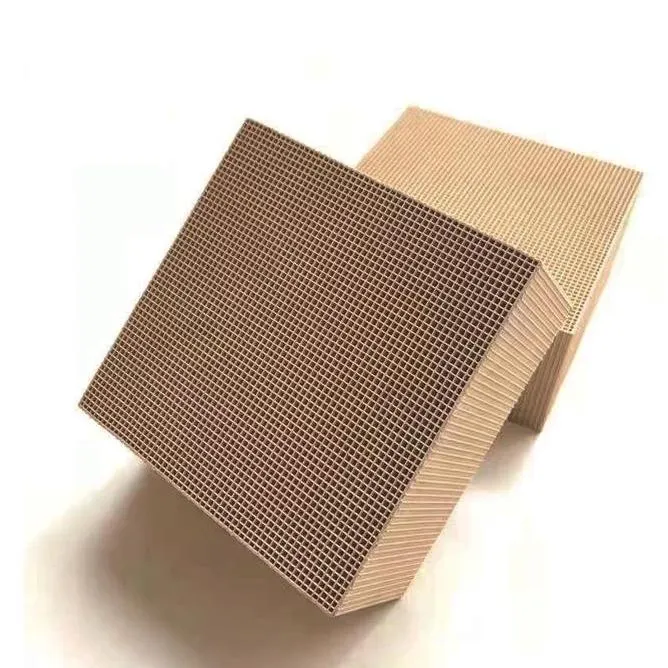
YC-XB-A is a cordierite honeycomb catalyst loaded with nano-scale platinum. It oxidizes benzene, toluene, xylene, alcohols, ketones, esters and other VOCs to CO₂ and H₂O within its operating temperature window, and is suitable for medium-to-high concentration VOC streams.
Technical Data
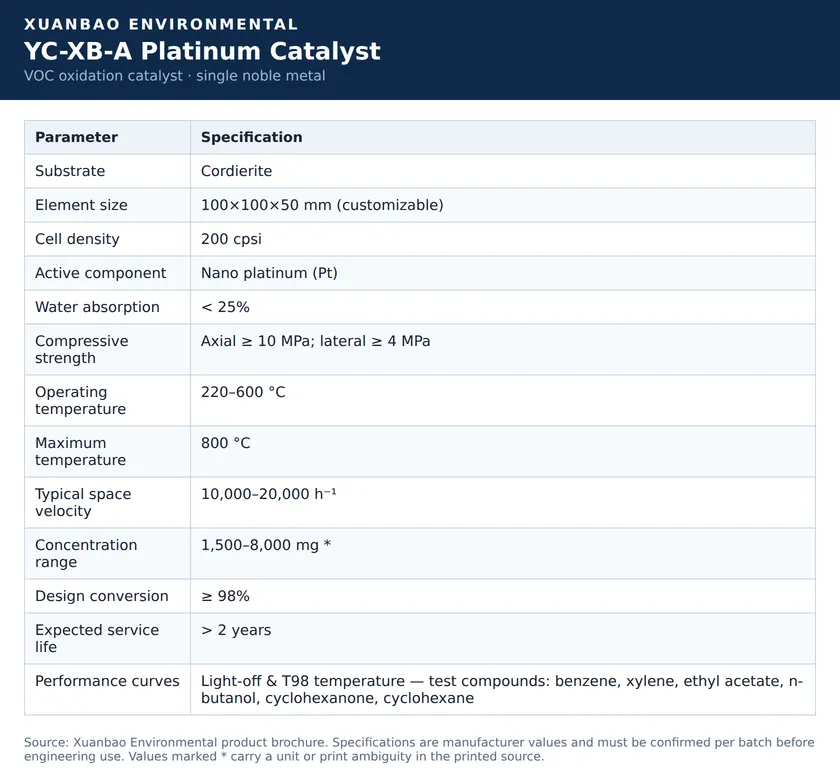
| Parameter | Specification |
|---|---|
| Substrate | Cordierite |
| Size | 100×100×50 mm, customizable |
| Cell density | 200 cpsi |
| Active component | Nano Pt |
| Water absorption | <25% |
| Axial compressive strength | ≥10 MPa |
| Lateral compressive strength | ≥4 MPa |
| Operating temperature | 220–600°C |
| Maximum temperature | 800°C |
| Typical space velocity | 10,000–20,000 h⁻¹ |
| Concentration range | 1,500–8,000 mg/m³ * |
| Design conversion | ≥98% |
| Expected service life | >2 years |
Values shown are manufacturer specifications or typical values unless marked (*). Parameters marked (*) are reproduced from source documentation and may contain unit or OCR ambiguities — they are reference values only and must be confirmed against the current product specification before use in engineering design. Design values are confirmed per project after operating conditions are reviewed. Please contact us for current data sheets.
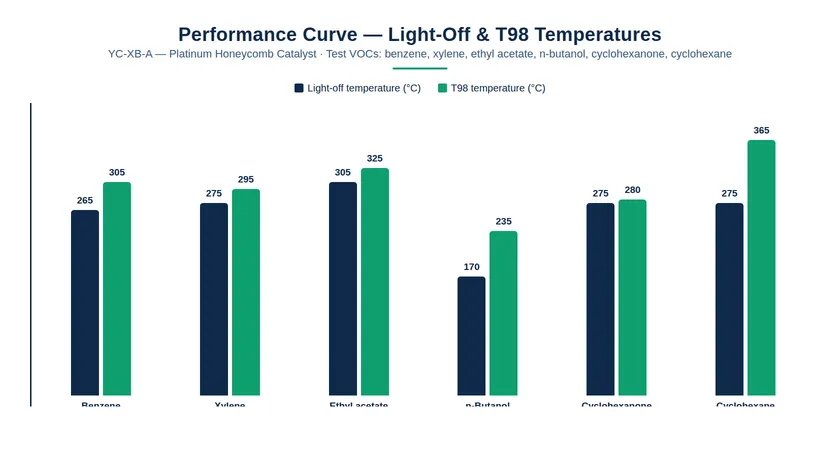
Performance Chart
Key Features
- Nano Pt active component with good low-temperature activity
- Wide VOC applicability — aromatics, alcohols, ketones, esters
- High mechanical strength
- Customizable element dimensions
Typical Applications
- Coating lines
- Printing
- Chemical manufacturing
- Automotive manufacturing
- Organic chemical processes
Application Limits & Conditions
Customization
Element size can be customized; larger catalyst volumes are assembled from standard elements.
Data to Provide for a Quotation
To receive a material recommendation and quotation, please share your operating conditions:
- Gas flow rate (Nm³/h) and inlet / target outlet concentration
- Gas composition and main pollutant components
- Operating temperature and humidity
- SO₂ and dust concentration (where applicable)
- Existing reactor dimensions and current catalyst / adsorbent type
- Required service life and any special requirements
Same family
Related Products
Platinum-Palladium Honeycomb VOC Catalyst
A dual precious-metal (Pt + Pd) honeycomb catalyst with lower light-off temperature and a wider VOC applicability window for catalytic combustion systems.
Non-Precious-Metal VOC Catalyst
A silver-copper-manganese composite oxide honeycomb catalyst offering a lower-cost catalytic oxidation option for suitable VOC streams.
FAQ
Frequently Asked Questions
What VOCs can the YC-XB-A oxidize?
Typical targets are benzene, toluene, xylene, alcohols, ketones, esters, ethers, aldehydes and general hydrocarbons within the specified concentration and temperature window.
What is the difference between YC-XB-A and YC-XB-B?
YC-XB-A is a single Pt system with a wide temperature window (220–600°C). YC-XB-B adds Pd for lower light-off and better performance on certain VOC mixtures (240–400°C).
What operating temperature range applies?
The documented operating range is 220 to 600 degrees C with a maximum of 800 degrees C. The actual working point depends on the VOC species, inlet concentration and space velocity.
What conversion is achievable?
A design conversion of at least 98 percent is documented within the specified operating window. The concentration range is marked as reference in the specification table.
Can it handle humid exhaust?
The substrate has documented water absorption below 25 percent and the catalyst is applied in coating and printing exhaust where humidity is common. For very humid streams the operating point should be verified case by case.
Discuss this product for your gas conditions
Send us your operating conditions — we will confirm applicability and return a material recommendation.